
Sports injury physiotherapy in Dapto
Sports physiotherapy covers injury assessment and rehabilitation for all types of athletes. We help you work out what training is safe now and use sport-specific testing to guide your return to competition.
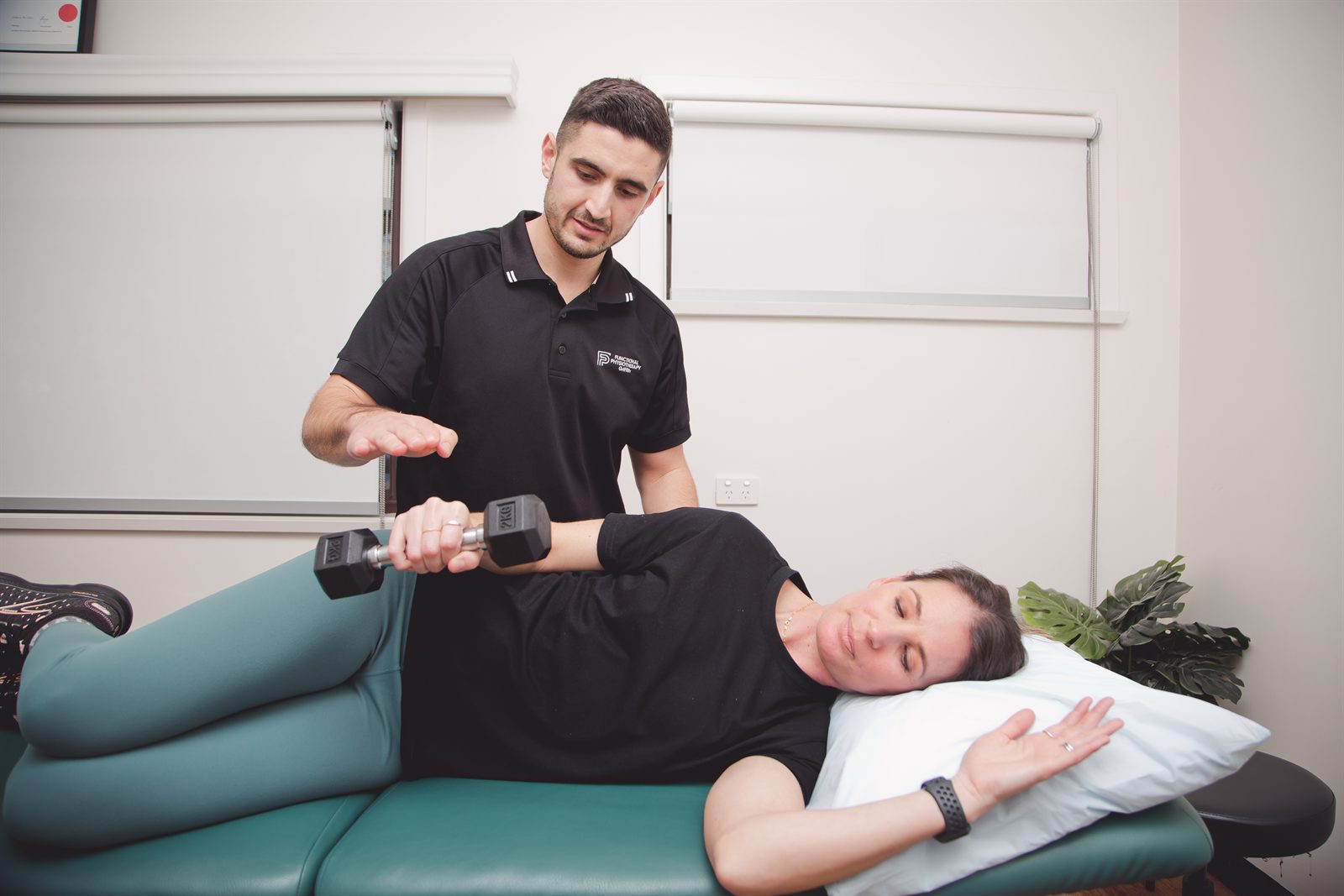
How can sports physiotherapy help?
A hamstring strain, a swollen ankle and a painful shoulder each need a different plan. Assessment starts with how the injury happened and what your sport asks of you.
Tell us what you were doing when the injury happened, what you felt and how it changed afterwards. That history and a physical examination often give us enough information to start treatment. A mild hamstring strain and an injury to the tendon near the pelvis can both hurt at the back of the thigh, but need different rehabilitation. If the diagnosis is unclear or a scan would change treatment, we will discuss further assessment.
Early rehabilitation balances protection with movement. Some injuries need a period of rest or restricted weight-bearing; others tolerate exercise sooner. We can adapt training around those limits, for example using a bike while a running injury settles, if that is comfortable and safe.
Pain can settle before strength and speed have recovered. A hamstring may feel comfortable during daily activities but still struggle with sprinting. Strength testing and gradual exposure to the movements your sport demands help inform the return decision, alongside healing time and your confidence. They cannot guarantee that another injury will not happen.
Sporting injuries we assess
- Hamstring, calf, quadriceps and groin strains
- Ankle sprains, repeat rolling and chronic instability
- Knee injuries: ligament, meniscus, kneecap pain, ACL injuries
- Shoulder injuries, rotator cuff problems and instability
- Tendon problems: Achilles, patellar, gluteal, rotator cuff
- Overuse and load-related injuries, including running injuries
- Post-surgical rehabilitation and return to competition
How we get you back
- An explanation of the likely injury and whether imaging would help
- Hands-on therapy or dry needling where appropriate for symptoms
- Loading the injured tissue as soon as it can tolerate it
- Adapted strength and fitness work while the injury heals
- Sport-specific testing before you are cleared to return
- A written plan you can share with your coach or trainer
The four phases of return-to-sport rehab
Each phase depends on the injury, healing time and how you respond to increasing demands. We review strength and function before progressing.
Settle and protect
Manage pain and swelling, restore movement as appropriate and choose safe ways to maintain fitness while the injury heals.
Restore strength
Progressive loading of the injured tissue through full range, until strength and endurance measure up against the uninjured side and against the demands of your position.
Rebuild power and speed
Practise jumping, landing and changing direction, then build acceleration and braking at the speeds your sport requires.
Return to sport testing
Objective, sport-specific criteria: strength symmetry, hop and jump testing, speed exposure, contact tolerance where relevant, before you are cleared for full training and then competition.
Rehab that respects the Illawarra sporting calendar
The Illawarra sporting calendar gives players little downtime. Rugby league and football involve sprinting and contact; netball adds repeated landing and pivoting. Summer cricket places different demands on a bowler’s shoulder and back, while surf life saving brings swimming, paddling and beach running. Your rehabilitation needs to prepare you for those particular demands.
A hamstring injury in round four leaves a different amount of preparation time from the same injury in the second-last round. Tell us about upcoming trials or finals so we can discuss what is realistic. A competition date matters to the plan, but it does not change the time an injury needs to heal.
With your permission, we can share training limits and progress with your coach so everyone is working towards the same return plan.
- Appointments before and after work, Monday to Friday
- Plans written so your coach or trainer can follow them
- Serving players across Dapto, Wollongong, Shellharbour and the Illawarra
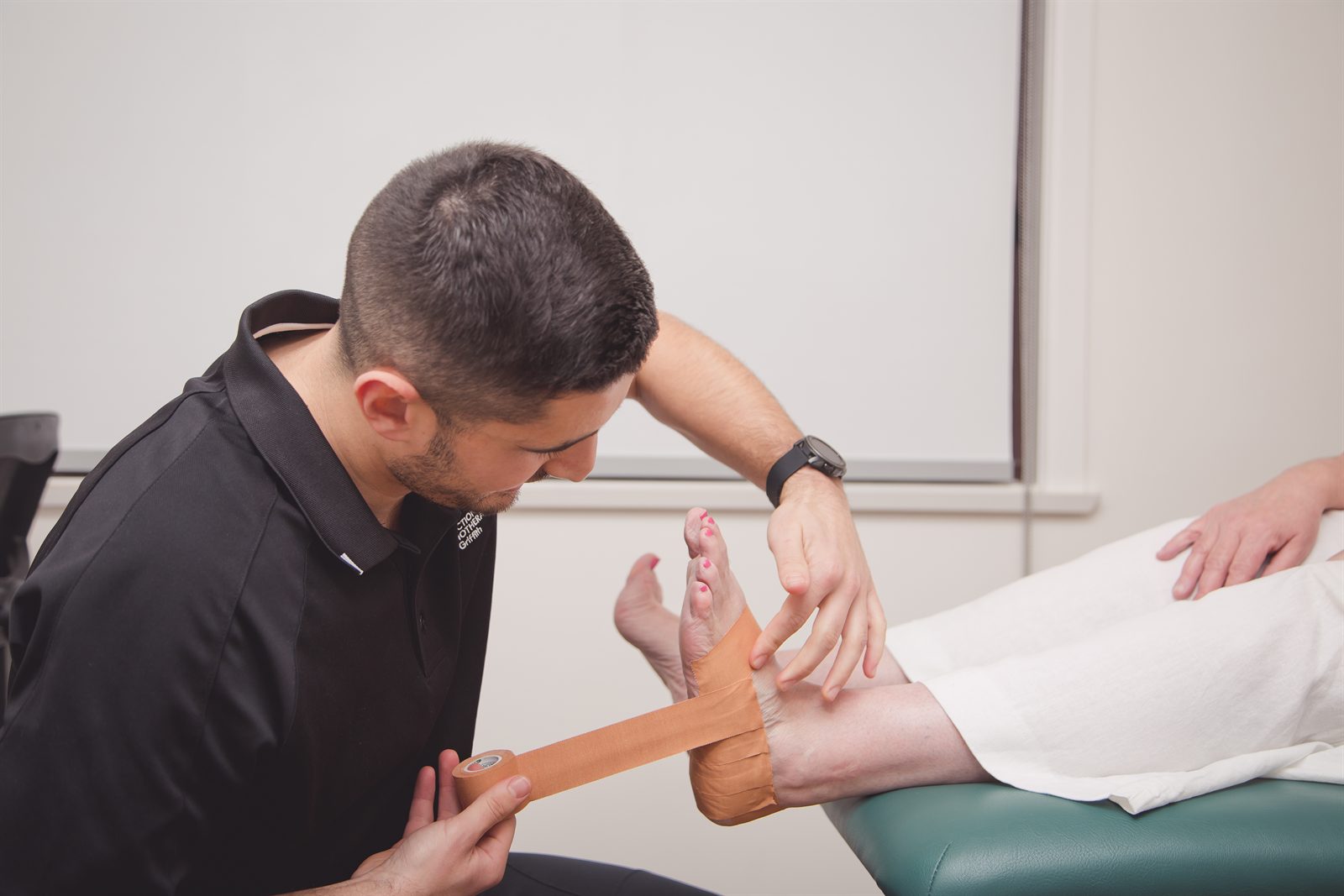
Reducing the risk of the next injury
A previous injury can increase the risk of another, particularly for injuries such as hamstring strains and ankle sprains. Rehabilitation should address any remaining weakness or loss of control.
Returning to a full training week can be a large jump from rehabilitation exercises. Build that exposure gradually and keep up the strength work your injury requires. Re-injury risk also depends on the injury itself, previous injuries and the demands of the sport; no program removes it entirely.
What a screening session covers
For athletes coming off a history of niggles, or heading into a pre-season, we run a movement and strength screen: single-leg strength and control, hamstring and calf capacity, ankle range, hip and shoulder strength, and the specific movements your sport demands. The findings help us choose exercises and training changes. A screen cannot predict every injury.
When should I see someone rather than wait it out?
Seek prompt assessment after a pop with rapid swelling, or if a joint locks or repeatedly gives way. If you cannot bear weight after an injury, seek urgent medical assessment to check for a fracture or other significant damage. Persistent pain that is limiting training also deserves assessment.
Sports physiotherapy FAQs
How soon after a sports injury should I see a physio?
Do I need a referral to see a sports physio?
Do I need a scan for a sports injury?
What is return-to-sport testing and why does it matter?
Can I keep training while I rehab?
Do you treat junior and school-age athletes?
Related pages
Read more about ACL rehabilitation, running injuries and dry needling.
ACL injury & reconstruction rehab
Prehab, post-operative rehabilitation and criteria-based return to sport after an ACL injury.
Read moreServiceRunning injuries & assessment
Diagnosis, load management and a staged return-to-running plan for runners of every level.
Read moreServiceDry needling (GEMt)
Dry needling for selected muscle-related symptoms, used alongside physiotherapy and exercise.
Read morePlan your return to sport.
Book a sports injury assessment with Chris in Dapto to discuss treatment and your return to training.